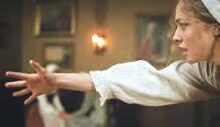




Grigoriy Kozintsev’s epic version of Hamlet presents the tragedy through stark visual means.
Many Russian artists have loved and celebrated Shakespeare. Grigoriy Kozintsev, one of the great directors of Soviet cinema, was among them. I had seen his King Lear, from 1971, and was impressed. But I recently watched his masterwork from 1964, seven years earlier: Hamlet. This time I’m more than just impressed. I think it’s one of the greatest Shakespeare films.
The first thing that struck me about this epic treatment of Hamlet was the castle, a massive, awe-inspiring medieval hulk looming over the story like a dark bird of prey. The director chose the Ivangorod Fortress (built by Ivan the Terrible) on the border of Russia and Estonia to represent Elsinore in the long exterior shots. The closer views and interiors were shot in multiple places, but the visual style is completely in harmony with the barbaric appearance of the fortress. Kozintsev went as far as he could with the expressionistic effects of arches, gateways, shadows in the night, under a great expanse of lowering sky. This is a Gothic Hamlet. Fear, doom, and foreboding permeate this version.
Innokenti Smoktunovsky plays the Prince with an air of steely determination. The usual ideas about Hamlet being indecisive are downplayed—the scene where he debates killing Claudius in prayer is cut, for instance. The character’s humor can’t be avoided, but Smoktunovsky plays the quips as clearly hostile and threatening. His presence dominates every scene he is in. He is a man alone—the director emphasizes this aspect so that Hamlet seems to be the only true living character in a frightful dream. A teenage actress, Anastasiya Vertinskaya, is almost unbearably fragile as Ophelia. Mikhail Nazvanov is a fine, imposing Claudius.
Kozintsev had directed Hamlet on the stage in Leningrad ten years earlier, using Boris Pasternak’s translation of the play, and this is the version employed in the film. The DVD, from Facets, uses the actual Shakespeare text in the subtitles, a decision I fully understand, since the language is so important.
The exteriors showing scenes of nature were shot mostly in Crimea. The castle interiors are made to seem incredibly large, with wide steps going up or down into what seems like infinite space. With its huge bars and gates, it looks like an enormous prison, echoing the sense of confinement in the hero’s mind. It’s also a busy place. There are many courtiers, soldiers, and servants. When the rebellious Laertes returns, stealthily invading the castle with his men, Kozintsev makes this coincide with Ophelia’s mad scene, her madness being a symptom of a general insanity descending on Denmark. The director wanted to make the political aspects of the play more prominent—the theme of the unjust usurper is central.
The widescreen black-and-white cinematography by Jonas Gricias is captivating. Dmitri Shostakovich was persuaded to write the score. It is a great one, disturbing and sinister. There were many cuts made to the play, as there must be in any film version of Hamlet, Shakespeare’s longest work.
All told, it took Kozintsev eight years to make the film. This Hamlet is among the most cinematic of all versions, giving us the tone and spirit of the tragedy through visual means. It’s not just a movie; it’s an experience.