


A rediscovery of the great South African photographer who lived most of his life in exile in the U.S.
Haitian director Raoul Peck has long been in the forefront of radical cinema. His recent documentaries include I Am Not Your Negro, the incisive portrait of James Baldwin from 2016, and Orwell: 2+2=5, which I reviewed last year. Right before the Orwell film he directed a portrait of another artist, not as famous as Baldwin, but a significant one: Ernest Cole: Lost and Found.
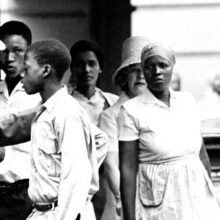
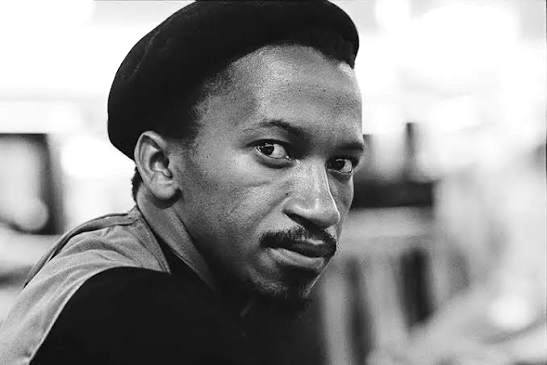
Ernest Cole was a South African photographer who documented life under apartheid in the 1950s and early ’60s. His work ranged from shots of people in the street to black people in the mines and in “banishment camps.” As a black man himself, he was always aware of the authorities monitoring his activities. Afraid of impending arrest, he fled to the United States when he was 26, and in 1967 published “House of Bondage,” a collection of his South African photos that received international acclaim. The book was banned in South Africa and Cole himself was banned from ever returning to his home.
Raoul Peck’s film narrates the story from Cole’s point of view, with a first-person narration performed by LaKeith Stanfield. It was not immediately clear while I was watching that this wasn’t taken directly from Cole’s diaries and other writings, but written by Peck using a variety of sources, including testimony of friends and acquaintances.
The most impressive aspect of the film, naturally, are the photographs, not only from South Africa but from the U.S. and other countries to which Cole traveled later. He had a marvelous eye for people’s faces and other details of ordinary life. In some cases, the faces were those of fear and arrogant anger when those with privilege encountered people of color. The film talks about the erasure of self in such societies, and how it was one of the things that spurred Cole to leave the country.
The central mood of this film is sadness and despair. Unfamiliar with life outside South Africa, Cole thought that he would experience a free society in the U.S., and it was a devastating blow to realize the prevalence of racism in America. He never really adjusted to life in the States, or anywhere else he traveled to. For the rest of his life he felt homesick, yearning to go back in spite of apartheid, because this was the place and the family he knew. In addition, publishers pigeon-holed him as a specialist in images of oppression. But as an artist his passion was for recording his own life in all its aspects—not just making political points. He never published a second book.
The movie benefits from the discovery of 60,000 of Cole’s as yet unseen negatives locked in a vault in Sweden, where he had lived for a few years. His scenes of life in the United States are just as revelatory as his earlier work.
He eventually became homeless and forgotten, dying of cancer at 49 in New York in February 1990, just a week after Nelson Mandela was released from prison. Ernest Cole: Lost and Found brings an important artist the attention he deserves.