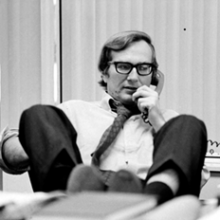



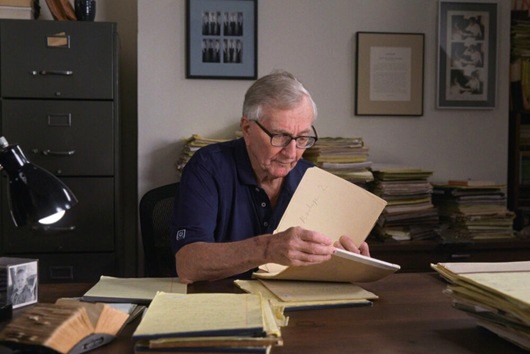
Seymour Hersh, or “Sy” Hersh to his friends, is an investigative journalist active since 1959—starting in local Chicago newspapers, then going to UPI, and finally The New York Times, where he became famous after breaking the story of the My Lai massacre in 1969. He since became a freelancer and frequent contributor to The New Yorker magazine. Hersh took on some of the toughest news items involving U.S. government crimes, and particularly attempts to conceal those crimes, which is reflected in the title of a documentary about him: Cover-Up, directed by Laura Poitras and Mark Obenhaus.
At 88 years old, Hersh is a remarkably lucid subject. He’s arranged all his files, including thousands of handwritten notes that one of his friends says, half-jokingly, are completely illegible to anyone but him. He is entertaining, and very candid and open, except when it comes to his sources, the identities of whom he fiercely protects. At one point, going over some of the filmmakers’ questions, he threatens to quit the film because of their insistent curiosity about certain government sources that he has cultivated for years.
The movie glances over his early life, including some of his sour opinions about his Yiddish-speaking immigrant parents who raised him in Chicago. At some point he became determined to adhere to truthfulness even when it bothered people, and especially authorities. The subjects of his stories were often powerful people who attacked his reputation, most famously Henry Kissinger, about whom Hersh wrote a highly critical book.
Interviews with Hersh, along with friends and associates, are interspersed with footage of the events that he chronicled. We are told the fascinating and lengthy story of how, starting with a rumor he heard from a Pentagon contact, he exposed how an army unit massacred the men, women, and children in the Vietnamese village of My Lai in ’68. The government had tried to keep it a secret. From the Nixon tapes we hear the President say that Hersh must be a communist. The Defense Department nailed things down to one fall guy, Lieutenant William Calley, but further work by Hersh showed that such crimes were not that unusual in the daily context of that war. It’s rather amazing from today’s historical distance to see how many people angrily defended Calley and vilified Hersh for the story.
After The Washington Post broke the Watergate scandal, the New York Times assigned Hersh to it, and his work did a lot towards making the public more aware of the corruption. Then he exposed the CIA’s long history of illegal spying on citizens, and its elaborate assassination plots.
Hersh quit The Times in 1979 after they wouldn’t print his reporting on illegal activities by big corporations. He emerged into the spotlight again at The New Yorker when in 2004 he broke the scandal about the U.S. torturing prisoners at Abu Ghraib in Iraq. The film includes some criticisms of his stories and methods by others, and he admits mistakes. But I couldn’t help coming away from Cover-Up feeling deep admiration for Seymour Hersh’s commitment to defying the secrecy that deliberately keeps Americans in the dark about their own government.