



Chris Dashiell celebrates his favorite films from last year.
At the end of a year, film critics start putting out “Top 10” lists or “Top 20,” or whatever. They’re fun to do—going over all the movies you saw in a year and making a list of your favorites is fun. And for people really into films, they’re fun to read as well. But it still gets taken the wrong way, especially since the lists are often framed as “The Best Films of the Year.” Even a very busy movie reviewer can’t see everything, so the claim that a list is made up of the “best” is pretentious. With all the award shows and publicity campaigns for certain films, people have used this notion of “the best” to spark competition. Who will win the award? Or: your best film is not the real best, mine is the best. And so on. Well, despite the buzz from fans and even many who write about films, a list is only a list of favorites. Competition is beside the point. The sole purpose is to acquaint the reader or listener with the author’s favorite films of the year. Why? So we can learn about them, and if the description sounds interesting, find them and watch them. Period. Furthermore, rankings are kind of silly even within a list. For subjective reasons I might list a movie first, second, or third, but once again, this is not a contest.
Anyway, I also want to mention that in my case I’m not able to strictly follow the release dates of films in making a list. The opportunity to see recent movies—either in the theater or streaming—doesn’t always lie within the official calendar year. So if on my list you see something and think, “Wait a minute, that’s from the year before,” I don’t care. Here are ten favorite recent films I watched last year.
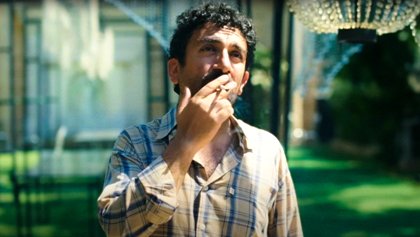
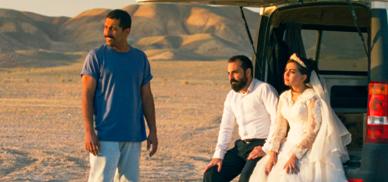
It Was Just an Accident, the latest film from Iranian director Jafar Panahi, is an amazingly deft and wise examination of revenge and responsibility, in which a man captures someone that he thinks tortured him in prison. But a glimmer of doubt makes him hesitate and find other people who had suffered in the same prison to confirm his identity before passing sentence. The complications that result are marvelously conveyed, plus Panahi slyly broaches the taboo subject of government torture in Iran.
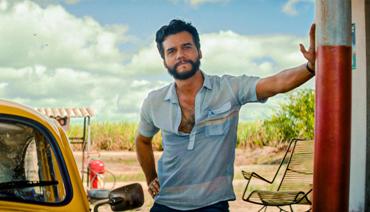
The Secret Agent is a new film by Brazilian writer and director Kleber Mendonça Filho. In a twisty narrative that mixes the real and surreal, a man fleeing an unspoken threat in 1977 Brazil hides out in a coastal city, unaware that two hit men have been hired to kill him. I fell in love with this film’s ambiguous style and imagery, its potent mix of desperate love and the menace of an oppressive society.
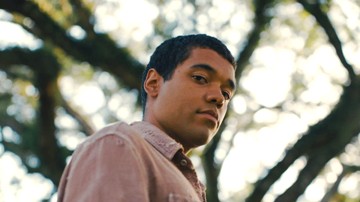
Nickel Boys is the story of two young black men who forge a fierce bond with each other at a juvenile detention camp during the Jim Crow era. RaMell Ross has adapted a Colson Whitehead novel with a bold style that exclusively employs point-of-view shots. The result is incredibly poignant—a film of intense, grief, love, and resistance.
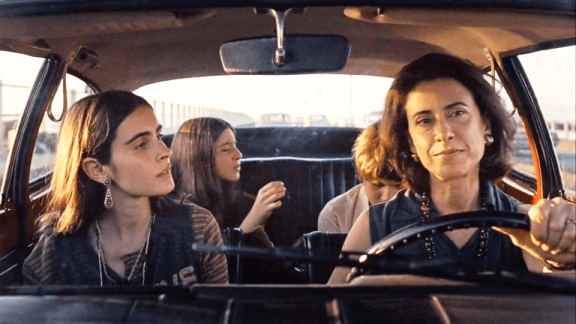
I’m Still Here is another Brazilian movie I admired, directed by Walter Salles, and starring the great Fernanda Torres as a mother who must somehow hold her family together when her husband is arrested and then “disappeared” by the military dictatorship. Torres holds the movie together with a totally grounded performance of emotional honesty.
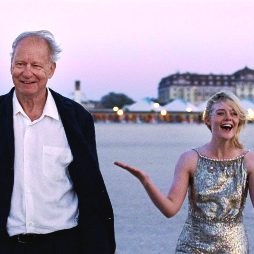
Sentimental Value, the latest film by Norwegian director Joachim Trier, is about two sisters (Renate Reinsve and Inga Ibsdotter Lilleaas) who bonded as girls against the background of their parents’ abusive marriage. One daughter became an actress, the other found fulfillment with her husband and young son. At the mother’s funeral, the unexpected appearance of the long-absent neglectful father (Stellan Skarsgård) causes turmoil. Trier’s delicate, emotionally resonant style uses the metaphor of acting to symbolize the way adult children navigate their families.
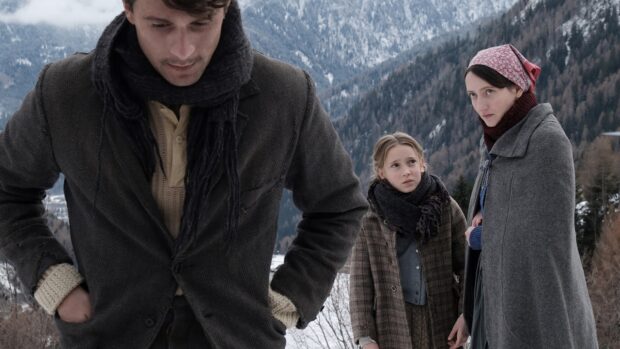
Vermiglio takes place in the village of the title, in northern Italy, 1944. Into a large family scraping out a living in this harsh environment comes a Sicilian who has deserted from the Italian Army as it collapses near war’s end. The family’s oldest daughter (Martina Scrinzi) is smitten with the stranger, with difficult consequences. The director, Maura Delpero, presents the characters to us in a quiet, measured style, sensitive to each person’s distinctive quirks, all against the ineffably beautiful landscape of the Italian Alps.

Frankenstein, the inevitable version by Guillermo del Toro, leans heavily into Gothic imagery, in a style of giant painterly excess that storms the heights of melodrama. Del Toro has interpreted the story as a tragedy of power and cruelty, in which Frankenstein (Oscar Isaac) in his desperate search to overcome death, is unwilling to consider his creature (Jacob Elordi) as a person, thus showing his fatal misunderstanding of life. It is a film of titanic imagery.

The Seed of the Sacred Fig, from Iranian director Mohammad Rasoulof, concerns the family of a judge during the mass protests in 2022-23 against women having to wear the hijab. The film dramatizes the atmosphere during the unrest by focusing on this one judge, a devout man whose decision to comply with authority profoundly affects his relationship to his wife and two daughters. The depiction of the girls, who represent a new generation, is even more significant given the current tragic repression in that country.
Close Your Eyes, from veteran Spanish director Victor Erice, tells of a film director (Manolo Solo) in search of his friend and lead actor, who disappeared decades earlier. The journey reveals the fragility of memory which ultimately inspires the main character to look back on his life with the calm closed eyes of death. It’s a mournful and beguiling meditation on the merging of life and film.

One Battle After Another is a satiric action film from Paul Thomas Anderson in which an aging former revolutionary (Leonardo DiCaprio) must try to save his daughter from a racist colonel (Sean Penn). Inspired by a Thomas Pynchon novel, the movie straddles the line between passion and defiant mockery to throw light on our current American predicament.
Here are the marvelous B-sides:
Green Border (Agnieszka Holland)
About Dry Grasses (Nuri Bilge Ceylan)
Sing Sing (Greg Kwedar)
Orwell: 2+2=5 (Raoul Peck)
All Dirt Roads Taste of Salt (Raven Jackson)
I Saw the TV Glow (Jane Schoenbrun)
The Old Oak (Ken Loach)
The Phoenician Scheme (Wes Anderson)
Corina (Urzula Barba Hopfner)
2025 was a disastrous year that happened to be full of great movies. Let’s watch more together in 2026.